Episode 215 — Three Things Helping Me Come Back Into My Body


Have you ever gone through a life transition you thought would last forever?
And during said transition, did you bury yourself in tubs of cool whip and binge watches?
Sleep through your alarm daily?
And then, did you terrorize yourself for not taking better care of yourself?
I relate.
As I approach two years after making a big move from east coast to west, I'm finally getting my spark back. I feel an aliveness reemerging I wasn't even aware was gone.
And today's episode, I'm spilling the California raisins on what's been helping me get back in my body, and come back to life.
In this episode we explore:
What Cool Whip, a meat stick, and self-compassion have in common
When gentleness is medicine, and when it's not
What happened when I asked Love to look at my to-do list
Washi tape, fig jam, tiny collages—and my growing theory about bringing meaning to life
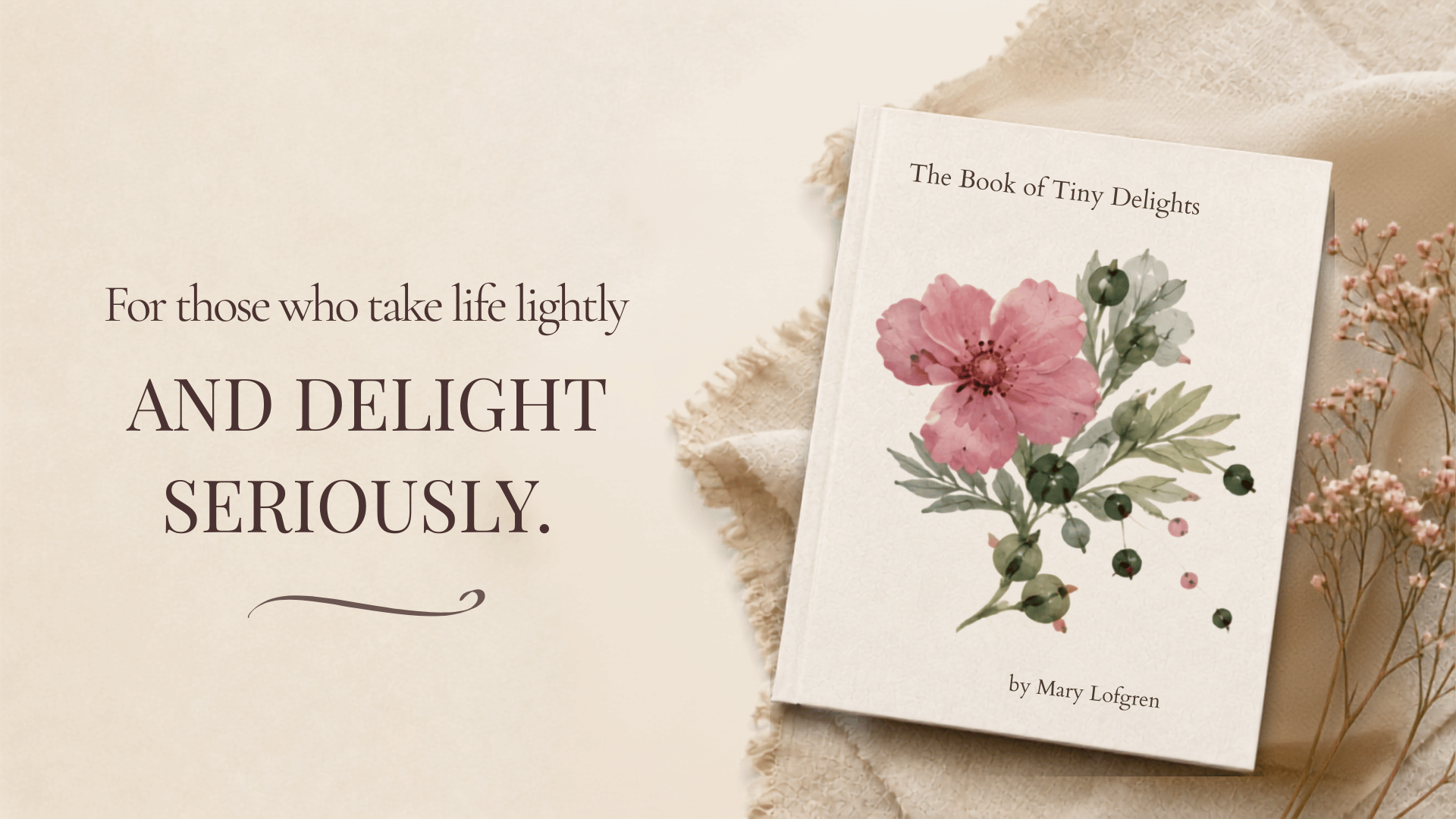
How I've learned to take life more lightly, and delight more seriously
LINKS FROM THE SHOW
-
THREE THINGS HELPING ME COME BACK INTO MY BODY
Hello. Hello beautiful beings, and welcome to today's episode. We are at the end of August, a very golden and sumptuous time, and I personally am coming up on two important anniversaries. One is my birthday, my belly button birthday, and the second is my two-year anniversary of living in Northern California. And in preparing this episode, which is about three things that are really helping me get back into my body, I wanted to share this with you because only now, after two years of making a big cross-country move from the East Coast to the West Coast for the first time, have I been noticing lately just how out of my body I've felt over the last couple of years.
You know, all of the transition from one coast to another. I came out here as a single person alone, not really knowing many people, and just knew I wanted to live here, knew I felt a resonance with the land, with the culture, and chased a dream. And it's really shocking to the system when one does that, you know. I once recorded an Instagram video that I'll link in the show notes that says, I'm here in California. I'm following my dreams.
And it goes on to be a little ditty that I'm improvising about how when you follow your dreams, it might appear from the outside like, yeah, you're doing it, you're following your dreams, but on the inside it's like. I slept last night in a children's twin bed with two snoring senior dogs, one in diapers, keeping me up all night because it's like those are the little things that are required to get the information to take the next step towards a dream. And it takes a lot of energy. And over the last couple of months, I have been returning to some timeless practices in my life and using some tools that I have found really helpful that I want to share with you today.
In case you have been navigating a life transition and want some simple inroads, back to feeling like yourself. But also if you're a human being alive in 2026 and you need a little support, a little magic fairy dust to help ease you down the path of returning to yourself. And one of the practices that I'll share more about today that I've been enjoying is the practice of tiny delights. Really, when I die, I want it to be known at my funeral: "She based her life on making meaning from the little things, and from tiny delights strung together like pearls on a necklace." Tiny delights just really mean everything to me and are the basis of Come to Your Senses.
In this way of living that's more connected to the body, connected to nature, connected to each other, and connected to the experience of being alive. And in celebration of that, I have created a new free truffle that I'm excited to share with you today. And that is called The Book of Tiny Delights. It's a whimsical little collection of beautiful ideas, absolutely unnecessary musings, and tiny pleasures. In a world so focused on producing as the purpose of being alive, The Book of Tiny Delights is a 19-page magazine of little portals to aliveness that don't require you to work for it, that are more about the art of paying attention than they are about producing and striving.
So you can download your free copy at marylofgren.com/delight. There will also be a link below this episode. And with that, let us now dive into our gems for today.
THE ENERGY ECONOMY OF TRANSITION
So if you've ever gone through a life transition that really zaps your energy. How that might manifest is with beliefs and ideas of God. I'm always behind. I'm not doing enough. I have fallen off the wagon with my self-care.
These are just a few of the ideas that have been circling through my mind over the last couple of years, and I want to start there, because I think that it's important when we talk about getting into the body, to name that getting into our body is a physical, emotional, energetic phenomenon and there is an economy to our energy. So an example from my own transition is that for a really long time, longer than I want to admit, when I first moved here, I would wake up in the middle of the night. And it's not that I didn't know where I was, but just, you know, my psyche and my body would absorb the shock of such a different path for my life than what my 20- and 30-year-old self had planned for my 40s.
And being very far away from family, very far away from the familiar. And I would wake up with this like aching urgency around what just happened. You know, even though I'm really happy here, and this was a really positive change, and I knew that from the beginning. There was an energetic deficit in my day-to-day life for how much energy I had to care for myself, to care for my business and my work, to invest in relationships because my body and my psyche were handling so much change. And so I start there because you probably have a whole what are they used to call those things Rolodex of practices and meditations and tools to get back in your body.
And you might beat yourself up a bit if you let them collect dust or don't have the motivation to use them. And I want to offer this tiny bit of information that, particularly in today's world, where literally human intelligence and creativity is becoming mechanized through AI. There is an expectation of ever-available energy to do all the things. And it's important when we talk about getting back into the body to do so and speak about it in the language of the body, which is a language of cyclical, natural, limited energy. So just like the Earth has a 24-hour cycle in a day, so does your body.
Your body is nature. It's not connected to nature. It is nature. Just like there are four seasons, your body has cyclical seasons, as does your mood. Your mood might rotate the seasons throughout a year, throughout a month, or throughout a day, or even throughout an hour.
Let's be honest, for those of us who menstruate and cycle through our bodies in a very physical, tangible way, this relationship to seasonality is the template for how to support our bodies in their natural state of wholeness and disconnection from this seasonality is one of the reasons that you might fight with the alarm clock in the morning, and that you might fight to go to sleep at night. You know this paradox that I think we can all relate to, of feeling exhausted in the morning and feeling wired sometimes at night, because the ways that modern culture extracts that seasonal rhythm from our bodies through notifications at all hours and through light, literally inches from our face for hours of a day, even living in homes by ourselves, you know, disconnect us from that natural rhythm of sleeping next to a warm body for comfort and safety, the delight of sharing meals with one another, the contrast of warm, nurturing sunlight shining down from a noon sky to the cooling, mysterious moonlight hanging in a sky of blue-black velvet.
And if, as you hear this, you crave some of these sensory, tactile, simple rituals that align us with our nature, where slowing down isn't this like big mental process that we have to organize. It's just what our bodies know how to do. The Book of Tiny Delights is there for you, but you may also love my guided journal called Sensing the Sacred, which is a book of 20 little rituals using everyday items that take anywhere from 5 to 10 minutes and that restore this natural rhythm within the body through experiencing the sacred, through the everyday, simple pleasures of the senses. So you can learn more about that at Mary Lofgren Book, and we'll pop a link to that in the show notes as well.
So we start here. Like all episodes here in the podcast. We usually front load the context of the episode and the why of the episode. Because let's be honest, I can spout and spurt embodiment tips for the next 15 minutes. But you already know the shit, friend.
Like we all know to take deeper breaths. We all know that there are countless practices out there that we can do to feel our bodies more, but without the understanding of what's really happening in the in a sense of disembodiment. You know, I use that word very intentionally in a sense, because when you have that Rolodex of practices staring you down like a Catholic school nun, giving you a window into my own psyche here and past trauma. But these things that you should be doing all the time, and laying on the guilt and laying on while you're doing this life wrong, of course you don't want to do them.
GEM ONE: THE BARE MINIMUM
And this is what brings us to our first gem. Which is called BM: Bare Minimum. So there's very little that will deflate your willingness to come back into presence, back into rest, back into this state that we call embodiment and regulation. There's very little that will sabotage that more than the pressure to keep doing more. And so there was a point where in my own process over the last two years, I just really had to accept that this was a time in my life where I didn't have a ton of energy left over to pursue expansion, but beyond what I was already experiencing.
And so this was not the time to start new projects. You know, I am a creative firework. There are ideas that run through my mind. I mean, hundreds a day and I want to do them all, even if they don't serve me, even if they have nothing to do with my life purpose in my life path. And I think in my 30s, I really slowed myself down by starting a lot of them and not finishing them.
And I'm kind of following my own arc of the last two years of how I started to get my energy back, and that was to focus on what is the absolute bare minimum that I need to do right now to sustain my life force, to sustain my earning. So that I can give my body and my psyche a little bit of breathing space to catch up. And one of the things we'll do in the sanctuary, which in case you're just starting as a listener, you're not familiar with what I mean by that. The Sanctuary is where we take everything that we talk about here on the podcast and where we move it from abstract ideas into tangible ways of living together as a community. And like I said, the sanctuary will be opening for new members in September.
And so if you're interested in exploring that more, we would love to fold you into the arms of this beautiful garden that we've created. But, you know, one of the things we focus on is this seasonal rhythm and the tendency that we all tend to have, which is the aiming our arrow towards doing way more than we have human capacity for. And the sanctuary is a place to strip some of that away, and to bring your attention back to your body so that you can experience more richness without having to make your life more busy and more full. And one of my teachers, Mama Gina, used to say that women, you know, because of our. Patriarchal conditioning tend to aim our arrow of a desire towards less than what we really want, and she would invite women to always ask for more.
Imagine more practice receiving more to make up for that misalignment of the angle of our arrow. And so I encourage you to bring that wisdom to your days and to your life, that if you're feeling overwhelmed or if you feel separate from your body, or if you feel like you just don't have the energy to do it all again, layering in that seasonality to know that this is temporary. I know for myself one of my fears in just letting my eating habits go to crap and completely falling off on my exercise practice and, you know, oversleeping almost every day. One of my biggest fears was like, okay, well, this is it. This is it.
I'm washed up. I'm always gonna be this way, and it's always gonna get worse. And I'm gonna just plummet into a depression. And my studying of the seasons as a template for living has given me so much relief in understanding the ever-changing nature of our energy, our emotional states, and moving into that state of peaceful acceptance that like, yeah, this is what I got today. Sheet pan of sweet potatoes and a beef stick for dinner.
So what I got was actually much better than the night before, which was a tub of Cool Whip. I remember saying to my housemate at one point, think of as Cool Whip in a meat stick. This was early days, but, you know, celebrating that immense achievement of replacing the Cool Whip with the sweet potato rather than what is the conditioned track in the automatic track, which is to just abuse myself for everything that isn't perfect. And so that is one way to reclaim your energy and to get back into your body is to look at your life and accept the seasonality of times where you can only show up for the bare minimum. And to make those times sweet, there was a sweetness to letting things be so simple, and I invite you to explore that for yourself and for your own body to hold that up to the light of your own truth.
GEM TWO: STRENGTH, SPARK & ALIVENESS
And so that brings us a bit more to present day in terms of my own personal arrival at a sense of safety and rootedness. And what I find is helping me get back in touch with my body and not just my body, but my energy, my spark, my aliveness. And the first one is a return to strength training. Now, I gotta tell you, I feel a little cringe saying that out loud because it's like we sure as hell don't need more people telling us what we should do with our bodies. But from my personal experience, you know, during the bare minimum days, I was doing walks, I was doing restorative yoga.
You know, I was doing what I had the energy for. And then there comes a time where gentle, which is medicine during these winter seasons of our lives, becomes just not enough and sometimes downright annoying, and can feel almost like overly coddling. And there is something so satisfying about feeling one's muscles engage. Feeling one's adrenaline rise to a healthier level, feeling fresh oxygen circulate through the body. And there is one fitness creator that I've really gotten into lately.
Her name is EMKFIT. Her name is Emily Thorne. That's her actual name. And what I really like about her workouts is that they're focused on music. They're focused on play.
They're focused on not doing it perfectly or right. There is a little bit of weight-loss-y stuff, not so much directly, but it's kind of in the periphery, in the air. So just something to consider if that can be activating for you as it can be for me. But there's also a pretty anti-diet-culture ethos to a lot of her work. So overall recommend EMKFIT.
She has a Patreon. She has a free YouTube channel. Check it out.
GEM THREE: LETTERS FROM LOVE
The next tool is for those moments when you're feeling lost in the swirl of your thoughts. And a resource is a practice called Letters From Love. Letters from love is the Name of Elizabeth Gilbert's Substack, and her practice of writing to and then letting love write back to her is a variation on a practice called two-way prayer, where essentially you're dialoguing with the divine and with spirit rather than, you know, prayers just spoken out and then hope for the best. And I am amazed at how this practice has helped me build a loving, clear, even joyful inner dialogue in ways that no amount of traditional mindset training or thought work or thought replacement ever has.
Because it's not just limited to the mental realm, it's tapping into that deeper well of spiritual wisdom and spiritual guidance that happens when we step out of the analytical mind and step into the endless river of loving compassion that pours forth from the subconscious And the way Liz instructs us to do it - and the way I do it - is I simply write at the top of the page. Dear love, what would you have me know right now? Or dear love, what would you have me know about recording this podcast today, or this move? Or, you know, whatever it is, whatever is on the rotisserie of your heart and mind in that moment. And I wanted to read to you one that really moved me recently, where there was just this long list of tasks that I needed to do that were so boring.
You know, things like putting the mattress away from a loved one's recent visit, going to the grocery store, walking the dog, cleaning my room, cleaning the bathroom in the hallway. I'm looking at the list right now, sweeping the front steps, listing that plant on Facebook Marketplace, blah blah blah. And I would look at this list and feel so defeated and overwhelmed. You know, I love what Glennon Doyle says her podcast is called We Can Do Hard Things, and I relate to her in this that she says, you know, we can do hard things, we can overcome addictions, we can send millions of dollars to places that need aid. But things like going to the post office with a package that needs to be mailed, it's like we can do hard things, but we can't do easy things.
And so I said, dear love, what would you have me know about this to-do list of? And then I listed just everything that was on my mind that I thought needed to be done that day. And this is what love said. And one thing to add that's relevant to the letter is I recently had a dear friend pass away and after her passing, another friend sent this beautiful song called Onaway that was written by Sterling Arrow. And as soon as I started writing this love letter on her way came onto the playlist spontaneously without me architecting it.
Dear Mary. Beloved creature. You, with the nervy belly in your robe at noon, wearing a synthetic fabric sweater that makes your armpit smell weird. A dog sleeping in your lap that needs to be walked. Balancing the scale of a to-do list in one hand, your friend's passing song on the other.
Trying to find your own honor way as you move through this day. You believe that the more you get done, the more safe you'll be. And I hear that. But life is not a video game. Shooting a gun of productivity at checkboxes on a list.
Life is a love game. On this list are tasks of work. Self-care. Tending your life. Tending your emotions.
But there are also coming alive tasks like walking in nature, connecting to others, and creating beauty. So look at it like that. Make today a love game. Feel like a hot tub bubble whirlpool just surrounding me as I read that out loud. And that guidance and that beauty made it so crystal clear.
Not just what to do that day, but the love to bring to it to make it not just endurable, but enjoyable. So two way prayer. Can't recommend it enough.
TINY DELIGHTS AS A WAY BACK TO LIFE
And the third gem relates back to what I shared at the start of the episode, which is the inclusion of Tiny Delights. So recently, I was working with a client who is wanting to experience more delight in her life, and she has such a craving for beauty and whimsy and just the little things that make life fun and meaningful. But when she goes to prioritize them, everything else shows up as having more importance on the hierarchy of her list. And one of the things we're working with in her coaching journey is if it makes you feel guilty, or if it feels absolutely unnecessary. That is a clear sign that that is the most important thing to prioritize in that moment.
And I'm seeing her bloom and blossom as a result of this practice. Because the thing about Tiny Delights is that for most of my clients, and I know many of you listeners, I know you can relate to the experience of getting so fixated on optimizing your life that you've forgotten how to actually live your life. And so The Book of Tiny Delights has poems, and it has tiny glimmers of how to layer charm into your everyday living. It has stories about beautiful, meaningful moments from my own life and just zany little details like lavender rituals and tiny collages. And it's just so delicious.
And the reason I created it is because I want to share a legacy of tiny delights in the world, but also because the little things that you love matter. They do not have to be world-changing. They do not have to be productive. They do not have to make sense to anyone else. If washi tape creates a glimmer of joy.
Deep inside your heart. If leftover pie dough with apple slices and gruyere nestled into it makes you feel like you lived that day. If these little things help you feel your body and sense your heart, they deserve a place at the center of the locus of your life. And so to expand on this, I really recommend just downloading the book, because there are dozens of tiny delights in this book, and rather than going through all of them, I'd love to just share them with you and show them to you in the flesh. Or shall we say, in the parchment of the book itself.
And it is an e-book and it's free. It's my offering, my gift to you. And you can download it at marylofgren.com/delight.
CLOSING
And so my love here is to all of the little things that help offer a doorway back into being in your body to feeling, noticing, and experiencing your life rather than just getting through it, and to doing what we came here to do, which is to love. Whether it's your child, your best friend, or a jar of fig jam. I support you and I encourage you to love big and to love this life all the way through by coming to your senses. Thank you so much for listening. If you enjoyed this episode, I would be so grateful to hear from you in a review or in a five-star rating.
And I look forward to delighting you and delighting with you in The Book of Tiny Delights and in our next episode. Thanks for listening. Ciao.
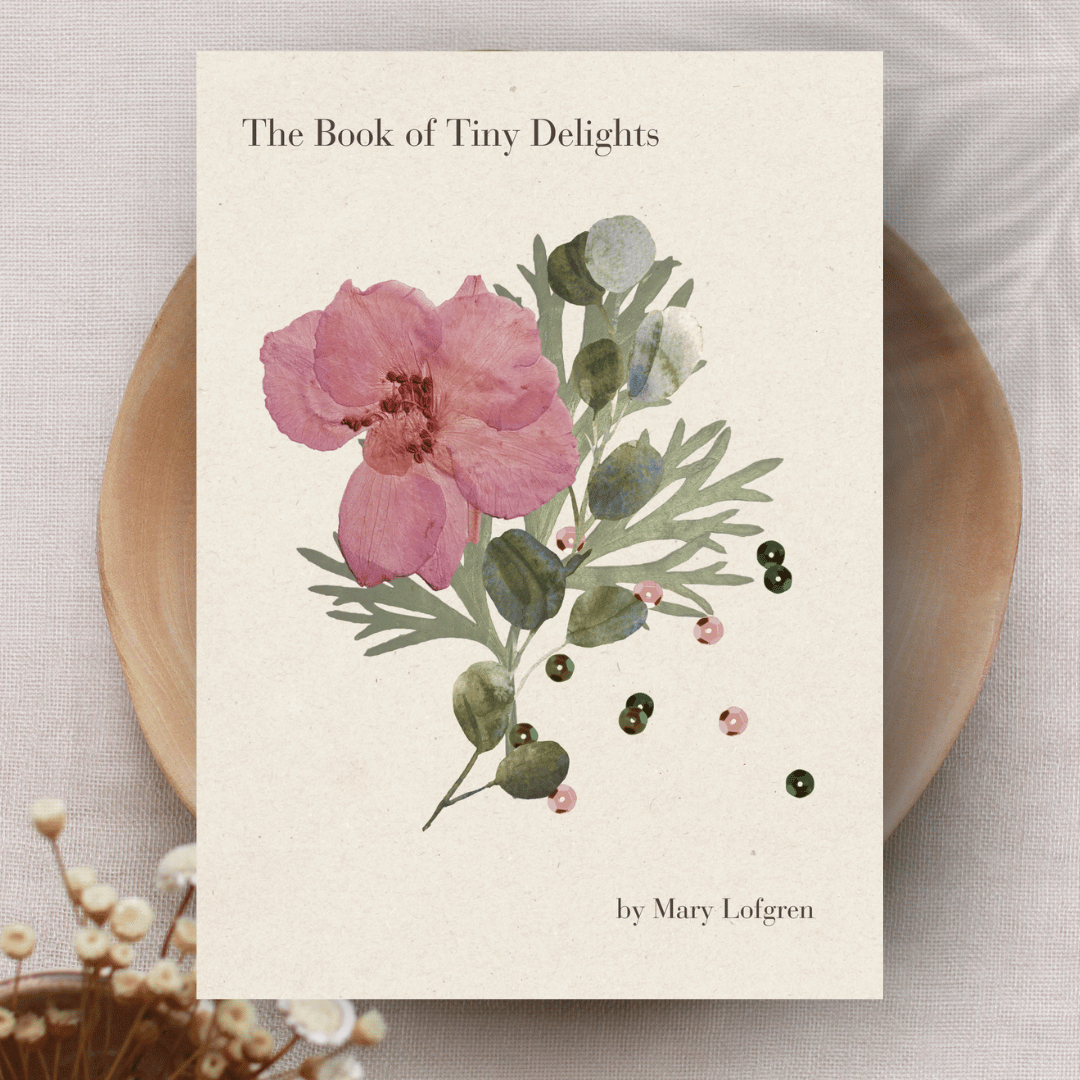
The Book of Tiny Delights
A whimsical collection of tiny pleasures, beautiful ideas, and everyday curiosities.