Episode 221 - Divorce as An Initiation (Not Failure) with LiYana Silver



In this episode, Mary Lofgren talks with relationship coach and author LiYana Silver about divorce as a dark night of the soul, a rite of passage, and an opportunity to reclaim your true self.
Together, we explore heartbreak, grief, shame, attachment patterns, self-trust, and the process of finding your way back to who you are after a relationship ends. We discuss how to stop defining yourself by a relationship's outcome, reconnect with your intuition, and make room for a more authentic way of loving and being loved.
If you're navigating divorce, heartbreak, or a major relationship transition, this conversation offers a compassionate perspective on what it means to lose yourself, find yourself again, and discover what might be waiting on the other side.
Liana Silver is a relationship coach and author of Feminine Genius and Waking Up in the Dark: Night of Divorce. She supports women and couples through heartbreak and relationship transitions, helping them break old patterns and reconnect with themselves.
In this episode, we explore:
Why divorce doesn't have to mean failure
The five phases of the dark night of divorce
How grief, shame, and attachment patterns shape heartbreak
Rebuilding self-trust and reconnecting with your intuition
What it means to reclaim your sense of self after a relationship
Learning to love without grasping or performing
LINKS FROM THE SHOW
Find Liyana at LiYanaSilver.com.
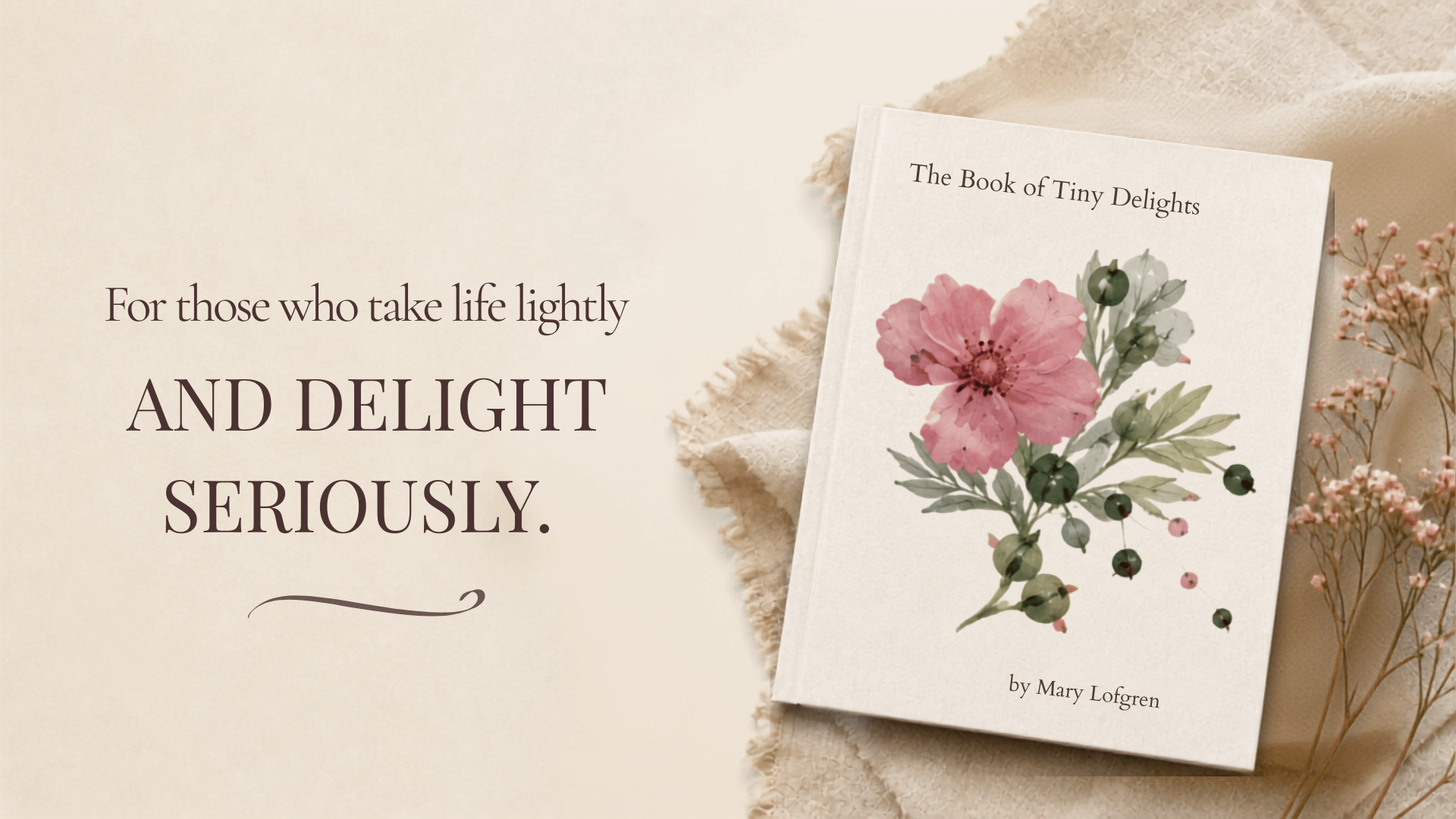
🌸 Download The Book of Tiny Delights to bring more beauty, whimsy, and aliveness into your everyday.
-
Hello beautiful and welcome to the Come to Your Senses podcast. I'm your host award winning certified feminine embodiment coach, licensed esthetician, and enthusiastic foster dog mama to animals across the land. Mary Lofgren. Here we explore how to bring more richness, radiance, peace, and pleasure to our lives, homes and hearts through the joy of beauty, the wisdom of the body, the warmth of connection, and the splendor of the senses. I'm so glad you're here. Pull up a pouf and let's dive in. Hello beautiful beings, and welcome to today's episode, which is a special conversation with my good friend and colleague Liana Silver on divorce as an initiation in human life rather than a failure or a foible. Liana is a relationship coach and author of Feminine Genius.
And recently released Waking Up in the dark. Night of Divorce. She works with women and their partners. Reckoning with divorce or heartbreak so complex it feels like a dark night of the soul, helping them reclaim what they lost in relationship, break repeating patterns and emerge awake, aligned and lit up. As someone who is divorced myself. I find lianas approach an orientation to divorce so refreshing, so normalizing, and so reassuring that the ebb and flow of relationships is part of the human experience and part of how we come home to ourselves and to each other through these great life initiations. So let us now dive in to our conversation with Liana Silver on divorce as an initiation, not a failure. Come to come to your senses.
My dear friend, it's such a pleasure and an honor to have you. I feel like, um. Our lives together and our friendship has been so deep and so rich. And I feel so honored to have walked with you and alongside you through the process of your divorce. As this doorway into a gathering and a becoming of, like, the truest gems of who you are. And so I'm so honored and delighted to share a conversation with you today, and to share that with them to your senses community. So welcome. Thank you for having me. And I feel very honored to be a guest, certainly to be a friend and colleague in your life, definitely to be a guest. So, uh, here, here I am. Well, you are a celeb in my world, so we're so welcome. So Congratulations, first of all, on your second book. Thank you.
Thank you. Yeah. How does that feel? I noticed, as you know, I said those words. Second book. It seems like there was a little zing of life force. And I'm curious, just how does it feel to have this book out in the world? Well, it's it's a somber topic, even though I think a coming closer to yourself is a very celebratory thing. The process we go through in heartbreak or relationship rupture is so tender and it's so difficult that like throwing confetti and being and saying, I'm so excited for a book's release.
There's a little bit, you know, tone deaf, I don't know, um, but, um, I know that every single person I talked to whose story went in the book or just friends or clients or colleagues or anyone was like, oh, I really could have used that when I was in it, or I know who I want to give that to. And and so I'm so glad there can be a resource in the world for just that. Mhm. Mhm. Yes, I so relate to that. And you and I have talked about this, but the first thing I wanted to just kind of name is the way in which your book does take a different approach from managing. You know, I feel like there's a lot of resources out there for managing your attachment system or for, you know, letting that loser go and, you know, being your best self kind of thing.
And in this book, you are really naming divorce and the ending of these significant familial social relationships as a rite of passage, as a normal aspect of being a human being in relationship. And I'm curious if you might just share a little bit about if a person is coming to listen here who is either, you know, like myself, I've been through divorce, um, 13 years ago, and at the time my own folk wisdom was like drink, debt and date my way through this experience, you know, and and and so I wonder if you could talk a little bit about that shift in orientation from like the victimization of this is happening to really the initiation that you talk about in the book.
And I want to first just say thanks to the books where, you know, you get to understand the patterning that got you here and get glowing again. And, and I do feel like we live under a narrative that says when any relationship ends and certainly a marriage, um, there's something about that term and the whole construct that comes with it, legal and emotional that it if and when it ends, it's a failure. There is no other word for it. And how can we not then assume we have failed? We are a failure ourselves. If something broke that we are broken and, um. So first of all, I think that we need another. We need new words that not all relationships should last for a lifetime. And sometimes they are dangerous and awful.
And we escaped with our lives and sometimes they just grew out. We outgrew them. They became stale. And the whole range in between. Uh, but I do really want to dignify that. There are other words besides failure. And, you know, I really do a lot of work using the lens of when something deeply, deeply, um, disorienting and painful happens that often we recognize it as the dark night of the soul and kind of use that resonant term, uh, to say, yes, divorce is often that. And some people would not say that that was their was or is their experience with divorce. But often people go, oh, I don't even know what that actually means. But I feel it. And it applies because partly a dark night of the soul is this initiation.
It is a rite of passage journey, and we can talk more in depth about it. But I do feel like something in us recognizes that just from hearing the words, that it is a journey through a very dark place. It is about something our soul goes through. For so many of us, who we were at the beginning of the relationship is not who we evolved into during the relationship, or because of its ending, and because of our conditioning, mostly as women or as females. Um, we are really we we are encouraged to lose ourselves and merge into the other person. So somewhere along the way, we lost touch with who we are. And sometimes this is a I'm not saying it's so great that your life got turned upside down and you went through divorce.
There's nothing great about it, and it is an invitation to notice where we have lost ourselves and to come back to ourselves. And that is one of the fiercest initiations that life has to offer. Mm mm. I'm remembering shortly after my my own divorce. Being at a party and, uh, some girlfriends and I just all doing some group circle sharing and and just weeping and just saying to the circle, like, how did I let this happen? Like, how how did I get here? You know, and so I appreciate the removal of failure from the equation because one of the most painful aspects for me of any relationship ending, especially romantic relationships, is, yes, the grief, yes, the pain of loss. But it's also the shame.
And I wonder, you know, in your study of rites of passage and of this arc, that the book takes women through and, and divorced folks through of or divorcing folks through of, you know, this isn't just about the relationship. This isn't about you didn't try hard enough. It's not that you didn't have the right therapist. Like, this is a part of you that is being born and being reborn. Just any words or stories that might come around around the removal of that shame. Yeah. Seamus Formidable. And I do feel like if we can get some in good relationship with shame as a human being, we're entering blackbelt territory. Yeah. Um, I remember this time the inroad was me recognizing a relational patterning. Um, but it really did.
It was a kind of an initiatory, uh, repair with myself, and I just was deep in the, um. You trying to work things out in the relationship? Still married. And noticing this pattern. I absolutely have a lot of, uh, appreciation for attachment styles and was like, oh, gosh, I've noticed that it's really easy for my partner to lead the conversation, leave the room, disconnect, and noticed. I mean, we can call that dismissive. We could call that an avoidant avoidant, um, connection style or attachment style, and then noticing my own that in this relational pattern I would be called anxious. Um, and so I just stopped for a moment and. Noticed what happened when I had that disconnection and the these words, I think, well, they're not just my words.
This is like for those of us who share this patterning, there is a terror when there is a disconnection and a sense of sense of self disappearing. Sometimes that feels like drowning in an ocean, or for me, more like floating in outer space. But there is a like my air supply has been cut off and I might die. Now all of us have the feeling we might die when when we're in that kind of distress. This is just a particular kind of impending death. And so I really was like, where did that come from? I, I, I get it activated by my partner disconnecting, but that's not where it originated. And I traced it back, like all good things can be traced back to Most to our, uh, to childhood.
And, you know, I was absolutely replay with my father, who, um, was more destructible than than neglectful, I would say. But nonetheless, the pattern happened. And for a while I blamed my partner. I was like, if you just weren't so avoidant, this would all be fine. Um, and for a while I felt really ashamed of being this attachment style. And then I thought more about it, and I were and just really went in there and I was like, what? What is going on here? It just feels so scary because no one that the the, the sound, the, the, the refrain was like, no one's here, no one's here, no one's here. And then I was like, wait a minute, I am noticing a part of myself say, no one is here. And I can say to that part of myself, I am here.
And maybe we would call that parenting, you know, or were parts work or anything like that, but, um, that placed another loving presence in the terrifying nothingness, less of self and then created like there's a self calling back myself. And what was such a trap for for shame around that became like, I can be with me when no one else is and I can stay when someone else leaves. And this is the fundamental relationship of our lives, is our relationship with us. And would it be nice if we could have a beautiful relational connection with another human being? Hallelujah! Yes. And in a way, if we don't have a way to locate ourselves and stay with ourselves. But. The most connecting partner. It doesn't matter. We we. It doesn't stick. Um.
And so what seemed like such a relational issue and and it is also became. Oh, this is a relationship with me. Mhm. And somehow that doesn't take away shame, but I think it allows it to move uh, and to bring presence back to ourselves. Yeah. Yeah. Yeah. Which in some ways I feel like is the opposite of shame is like that loving presence. Yeah. You know. Right. Yeah. And I love that. I love I mean, I love so many things and what you just shared, but, you know, this connection of origin that so often gets displaced into romantic relationship. And I really appreciate that awareness that who we are when we get into a marriage is not who we are when we leave. And I know for myself, my ex-husband and I met when I was newly 23.
I mean, I was still a child, for God's sake, you know? And then I have a fully formed prefrontal cortex. Yeah. Totally. And he was my first boyfriend. My first ever serious boyfriend. And then 11 years later when we separated. I had never lived alone. I had never. This was my first real breakup. I mean, you know, it was it was a rupture. And I think. Let me just pause. What question wants to come here? Um. Like what I what? I'd love to just pose as a topic. I don't even know that it's a question. But, you know, often the self that gets into a long term, committed relationship, especially if we get in when we're like 20 or 30. Early 30s. Early 30s. It's it's like we're not actually even a self yet.
And so then when the relationship ends, it just doubles down on the lack of self or the reaching or the running that takes place in romantic relationship. And I love so much what you're describing, which is this reconnection to the relationship of origin. Connection with self, connection with spirit, connection to like the nurturance of that dark place of terror. Because I like dark night can also be. And you talk about this so much in the book, but like, it's like this. It is a womb of transformation.
And so I suppose this is another question about shifting the orientation from being abandoned in the dark to held by the particular dark that you're in, and what has worked for you and worked for clients in seeing that differently and seeing it as the spiritual arc that it is. Yes. And let's come back to not really being a fully formed self, because often we get into a relationship earlier in our lives. Not well, obviously, not always. But let's come back to that because I really appreciate you bringing that up. Um, but yes, I think there's something that is terrifying about the dark like three and is a scary time, right? The dark, dark part of the night.
Um, but I also think that there's part of us that knows certain realizations and work only gets done in the dead of night. There's something about that. At that time. Monks and nuns get up at 3 or 4 a.m.. Specifically at that time. I don't. I mean, I don't condone early rising, just so we are clear, but, uh, even for a dedicated meditation practice. But, um, okay, so here's what I find incredibly helpful. Just take it on faith from me, from you, from anybody who has studied or been through to say, this is the worst shit ever. Yes, and please take it on faith. You are in a loving process of dismantling and rebuilding. It does not feel that way right now. But but please consider you have entered into a process that is deeply transformative.
It doesn't happen to some of us. It happens to most of us. And I find that something else that's helpful is just a little bit of a map through the phases of this dark night of divorce or heartbreak. I just made them up. If they resonate, great. Um, you know, these are all just really good tools, but I think the there's a five phases and the one that is the most impossible to feel like it's okay is the second phase and it I call it dissolution, which is really acute. It's very painful. Things are really falling apart. You're really recognizing late like you did with your circle of friends. Like, how did I get here and where is here? And right like it is the dead of night.
And if someone says it's always darkest before the dawn and dawn is coming, you're like, no, no, no, no, no. Like I'm in the middle of the ocean. I can't see either shore. Um, so back up with your platitude. There are more phases coming, so I really just we can go over them, or we can just say, like, there are other ones coming where, um, you will be going through. You will be moved through a process of transformation and eventually emerge. Will you emerge perfected and it with your best life? I think that sometimes life becomes even more demanding in kind of a waking up process, but it becomes more true. You are being reshaped into like a more true, authentic group like grounded self. This is the process you are in and it is not easy or comfortable.
And I do feel like you have been such a help when I have been in those phases, because it needs a specific kind of support, because it's there's a lot of despair. So just really holding anyone who is in that phase with deep love and compassion. Of course, it is excruciating. But to widen the frame, to say this is the second phase of five and there is a far shore and you will reach it. Mm mm. Yeah. That is so reassuring because I know in that gooey phase it's like it's just going to be this forever. And a question that occurred to me when I was just putting myself back in that phase that I'd love to put on my like, client hat for a moment and ask you is like, what if I don't want to transform?
Like, what if I don't like, what if I want to become a more real version of myself? Like, I just want what I had but a little better. You know, and yeah, I just felt inspired to drop that in. Oh, I feel, uh, I'll do my best to translate on behalf of the Loving Dark. Yeah. Um, so the oldest, oldest myths that we have, we could say a dark night of the soul or a dark night of dwarfs roughly follows the heroes or heroines journey. And every once in a while, the hero will just say heroine is called. Goes willingly. Hmm. Sometimes, like I hear the call of my best, more fitting self, and I'm going to go off on the journey. And that is not as often as like what happened to myself and my life. I didn't want this call. I did not want to go. Why are you making me?
And so, in a way, I go, Holy shit, sister, I don't know either. It just seems like the some part of life that that pulls us into this, you know, the the hero's journey would say as a call to adventure and I would call it a call to in venture, like it's going in. Um, I don't know, can we ever go back? Right. Um, so I just feel like the, you know, the, the truth of what is real for you will emerge if you don't want a huge recall, great. But something is this is a maturation and a ripening process and something in you like, I don't know, did the apricot want to ripen? Right. But something about our evolution as humans moves us along this evolution path.
And and I want here's what I want to say is this actually came from one of the people I, um, whose story I collected from my book. And so I asked everybody, I said, what would you tell someone who's in the GUI phase? Um, whether or not we can hear it, because usually we just like to throw up the middle finger. Yeah. Um, so this person said consider it could get better. Mm. Consider it could get better and brighter and like, okay, maybe not like the perfect makeover, but please consider it could be a so, so, so much better and brighter and more fitting and that your system does not have the architecture to imagine it at this moment. Your system cannot make the pictures. That is part of what is happening.
And so I know that that some of us, a part of us can, can hear and take on faith that in the dismantling and reassembly process are architecture changes, we begin to see what could be better. Um. But not all of that would be talk. You know, what I would say is, yeah, I know I felt that. Yeah, it makes all the sense to want it back. Maybe a little better. Yeah. No. Like, what the actual fuck. That's what I would also say. Yeah. Yeah. I really appreciate that awareness. Like, you just can't see it yet. Like you don't have the architecture. I remember I was in a relationship and it was one of those situations where when I was in it, I was so clear that this was not the right place for me and then we'd break up.
But I loved this person, and so I'd feel such a depth of grief and pain that I would then confuse that with, well, if it hurts this much, that must mean I love this person this much, and I should go back, you know? And a therapist said to me, know, Mary, when we're in deep grief. We can't access desire like, literally our system, the stress response. Is shutting down the part of our brain that can imagine and can create and even wants to create. And that was such a helpful anchor for me. Of that it's supposed to feel this bad, and that letting it feel this bad is actually what makes it feel better. But that, you know, there's a ingredient in the healing process that can't be controlled, which is time.
And, you know, because I'm a Virgo, I'm a, you know, self-help, straight-A student. I want to do all the things. I want to answer all the questions in the workbook. And, you know, and it's all control to not feel the death of grief. And I want to just dog here the piece about who we are when we enter relationship and who we are when we leave relationship. And because I know you wanted to go back to that and spill it, sister, tell me your thoughts on that. Yes. Okay. And then we might have to dog hear what you just said. Um, I like your little zig zag or zig zag pattern. Um, feel free to respond to that first and then we can revisit. Yeah, yeah. It's fresh. It's really articulate as you say it. Maybe just to add a one piece to it is, um.
This is a this is a subtle, nuanced thing because what you're saying is really true, which is we actually, if we can be with what feels like is fire and that will hurt us or will drown us or bury us alive. And if we can be with that, you know, the psychological term is tolerance, but it's like a little bit more feeling it before we jam out, before we, you know, disconnect. It's sort of a softening of our knee jerk response. And that that is part of what eases it. I absolutely agree there is a life cycle to a feeling, and we often, um, have never had the chance to be coached through or told that this too shall pass. This is like a wave. It can get really intense in the middle, but it will and it will ebb away.
And um, and that feels like nervous system prowess to, to and maybe like a couple seconds at a time, you know, not not minutes, not hours. Um, you know, a nice poetic way of, I've heard it said is the, um, the cure for your pain is the pain. And at the same time, we also do feel the undertow. And so I think that this is nuance, right? I think there is a time to be like, I'm holding up the workbook. I'm not tolerating anymore. And going on a walk or you know, that this may be a controversial thing to say, but maybe you do have a glass of wine. Not if you're sober or you know what I mean. But you just. You get a break. Yeah. Yeah. Yeah. We need to titrate. You know we do. And and let me say this to you before zagging and zagging is grief.
I mean, the these words depression, anxiety, grief, these are hard ones. But grief is as hard as it is, is the natural expression when we lose something we love. It is an honoring of what we love to actually feeling the grief, the wailing, the crying. The despair is an honoring the feeling of it. And sometimes I think that can give us some courage to feel it because it's not like, oh shit, I'm just drowning. This is. This is a ritual. This is like, you would not be feeling this if there wasn't something you loved and yet. Or love. And yes, it's changing where it's gone. And that is tragic. But you love. And this thing that was or is, is so lovable and that is so life affirming. And so sometimes that gives me courage, too. Yeah.
Um, so I think a lot about like, what's a self? We're not a self, a fully formed self when we get into a relationship. And what do we lose? I lost myself in a relationship. We all sit when we say that. But what do we mean? And please take this to the degree it's useful. But I think ourself and this maybe is a self with a small s. I think a self with a big S is our connection to source and to maybe higher self or divine. But a small s is not not unimportant. I think it is what we feel, what we need, what we know, what we want. We the psycho personality. Right? So when we have been accustomed to when someone asks us, where do you want to go to dinner? And we say, I don't know, what do you want? Mm. Or, uh, I know you're in a tough time. What do you need?
And we go, like, I don't know where to access that information. Or we grew up and people were saying, no, you don't see what you see or you don't feel what you feel. And so we're overriding our inner knowing or our intuition. And that gets really muddied or buried. So I think that's the self we lose. Mhm. And part of the self reclamation process is what actually do I want? What is? What is it that I know that is it's not the truth for everybody, but it's the truth for me. Um, what are my needs? What? What do I feel? Not am I feeling the feelings of everybody else? Uh, but what do I feel? Um. And I would say that all genders experience this, but we learn to have a sense of self-esteem. So, like, how do we value ourself? And we we get that by how we how well we perform.
How well, we, uh, how do we are we attractive. What's our appearance. Right. Are we being chosen in the relationship. And that is all conditional. And those things matter to a degree. But self-esteem is really valuing yourself. And, um, we have the relationship is often a proxy. We're like, if you value me, I'll value me. And when it falls apart, we have we are adrift. And so. Um, yeah. The part of us that was just evolving wasn't a fully formed self that then became something different or is really like, is evolving as the relationship is breaking down. And so I think, yeah, we get to reclaim that self and a self esteem that goes with it. Yeah. Yeah. Yeah. Yeah.
I'm just remembering, you know, my, my marriage ended very abruptly and very, uh, it was grisly, like the way things ended was really grisly, which was so shocking and so unexpected. And for so long, I just held on to so much bitterness. And there was betrayal in the in the marriage and like, long term betrayal. And so for me, it was like, was any of that real, you know, like 11 years of falsehood and I, I resented like, I just questioned every single part of myself that I felt like had formed in the marriage. And now, you know, 13 or so years later, like one of the things my ex husband really loved was like new wave music. And, you know, I was 23 years old. So I'm like, yeah, I'll get into this.
And I remember listening to it, uh, one day in the car, I don't know, a couple years ago and being like, oh no, I do like this, you know, and just like that, it doesn't, I, I think it would have been helpful for me to hear, like, it doesn't have to be black or white in terms of like, oh, that wasn't really me who got into that relationship or who was in that relationship. Like, it is always this masterpiece that we call self. That is evolving and, um. Yeah. Yeah. Yes. Yes. Especially when there's betrayal or deceit or lying or omission, which is like, sometimes it's obvious, but sometimes it's subtle. Um. And I do really want to hold. No relationship is all bad or all good. It is complex.
And as you're working on it, the underlying entrenched dynamics are getting more complex. Um, so let us please say it is not black and white. Uh, and I think one of the most damaging tropes, aside from if you're divorcing you've failed, is when there's a betrayal. It was all a lie. Mhm. And we all have our lines over which we will not step and yet. Um, and, and I mean the questioning everything. What was true is, is a harrowing process. I think it's really important whether or not there was betrayal or not. I happened to be someone who's like, let me strap on my headlamp and let's just question everything, and it's okay. That's an awesome personality. Um, but I do want to say, man, part of a human maturing is holding too many truths or opposing truths at the same time.
Um, that doesn't make us, um, naive. It actually is, I think, really nuanced. Um, so, yeah, to your point, it isn't black and white, and there may be things where you're like, oh, that was a lie. And. Right. That's a non-negotiable. And I, you know, like, wow, I see that was a warning sign or uh, oh, gosh, this is a really rich territory. Like, oh, that's a red flag. I ignored that sometimes. It wasn't. There was no flag, right? Right. And it just it evolved. We're all evolving. And so it's not black and white. And that sorting process of what you want to leave behind and what you want to take with is I just want to dignify that process. Mhm. Mhm. Yeah. Thank you. Yeah I just felt a little thumb soften when you said you weren't naive.
Like, I think for myself since I got into that relationship when I was so young. I, I just noticed some threads of still holding on to some self not loathing. It's like self, uh, like I jeer myself like you naive little 20 year old. What did you know? You know, and it's like I knew to follow my heart. Yeah. And I didn't have the technology installed to trust myself yet. You know, in the way that I needed to. That's right. Right. Yeah. The the tools you needed were going to come 13 years later. That's right. And intuition. Right. Or like. Mhm. This isn't quite right. That sense of knowing is is iterative. Like it it is created. It is refined. It builds on itself. It's like we don't just know everything from the get go all at once.
Only right part of it is going what happened then? Was there a sign I was there a feeling in my body that I can identify now that I didn't even know to, to name at that time and oh, it was there and maybe I overwrote it. Maybe I didn't even know it was there. But now I can see that was something that was intuition, that was knowing. And I can take that forward and help me now. And, um, yeah, I mean, I think this is a real delicate, delicate process of self-forgiveness. Um, especially if. Yeah, because we're, we're doing an inventory of all the ways we messed up. Mhm. Um, not only was I naive, you know, but maybe there's, there's things that are working through like, like you said like sweetheart you didn't have the tool. Just hold on 13 years. Yeah yeah yeah yeah.
Well that brings me to my last question. I, I woke up really early this morning, and so I took a little cat nap before a call. And when I woke up from my nap, this question came in and it was like, ask her, what are we waking up to and wake up? I know, right? Um, so it's like waking up to, like, something I'd love to just kind of put here at the end of our conversation is, what are we walking into waking up to, you know, because it can be a grim and a dark process. But on the other side, it's like, I want to be mindful not to make it all rainbows, because it's not. But it's like, God damn, am I glad that happened.
God damn, am I glad that I'm myself today instead of this caricature of myself that I thought I had to be as like an American wife and mother, you know what I mean? And just. Yeah, just I wondered if you might talk about some of those final phases and where they lead us. It's a beautiful question. No one's asked me that. Mm. Um, yeah. Thank you. Thank you, friend. Um, I think it's very personal. Um, but I do think it's intricately related to where we realize we've been asleep. What we haven't been paying attention to, or what has just been sleeping. And it's time for it to wake up. Uh, so that feels like the personal part. Um, yeah. Oh, I've been playing a part. I've been playing a role, and I did it so well over time. Like, I should get overtime payment. Right.
And fuck that, I think we're waking up to. What would it be like to have to actually connect with someone? If you do want romantic partnership, where each person is has a level of self esteem, sense of self and like general maturity. We don't all have to be perfectly healed so that we're not coming together to reenact and heal old wounds. Hmm. What would that mutual like mature self and loving be like? I like waking up to that possibility. I like waking up to, um, just a real abiding sense of how lovable, lovely, lovable, even in the word. It has a little bit of doubt whether you're lovable in there. So that's the best word I've got. But this, even if it might waver sometime. But oh, I'm so. Wonderful and magnificent.
And I'm connected to an innate value and presence and divine. Overflowing. Totally imperfect and a pain in the ass. And have morning breath. And. And so lovable, and I don't like 90% of the time I live there 10%. I have my self doubt. But waking up to that. Mhm. Yeah, I love that. I remember Jerry doing some journaling on the idea of like, we have to give up what's good for what's great. And we also I think have to be willing to give up what's great for what's real, because there were so many great things about every relationship I've ever been in. And there was also an element that wasn't real for me, which is why they ended, you know, whether I ended them or somebody else did.
And so I love what you said about who, like an experience of loving without grasping and an experience of being loved without performing. Like I will do anything in this lifetime to experience that, you know. That's right. Yeah. And it's like the simplest thing we could say, like, you could just be you and I could just be me and we could love each other. Um. Are you. I'm with you. Like what? Uh, let's let us please wake up to that. Yeah. Yeah. So the book is being born as we speak, and people can purchase it. The paperback? Yes, audiobook and the e-book all is available now. All are available. Amazing. Congratulations. And of course, I'll put all of your links in the show notes. But Leona silver.com and I adore you. And I'm so inspired by you. Oh thank you.
You curate beautiful, tender, powerful space. And I am honored to have been with you.
Feeling dangerously low on whimsy. Don't worry, my friend. We have got you covered. Head to marylofgren.com/delight for a tiny little book about taking life lightly and delight. Seriously, download your free copy at the link in the show notes or at marylofgren.com/delight